
The Case Against Writers Using AI to Write
If you love writing, there are several reasons you should do it yourself

Hey fellow writers: The Writer’s Guide normally publishes on Tuesdays. But the sudden, meteoric hoopla over AI-generated writing and AI-detectors compelled me to spell out the strong case against AI-assisted writing, especially for anyone who loves to write. I’m eager for your comments, since the landscape is a mess and we’re all trying to figure out how to navigate the rapid, monumental changes. —Rob
Writers, editors and media pontificators are losing their minds over the ubiquity of AI-generated writing, AI-assisted writing, AI-detectors, and—no surprise—false and unverifiable claims of writing done with the help of artificial intelligence.
At the granular level, discussions revolve around such details as whether using certain words or punctuation marks—such as the em dash—will flag human-written stories as AI-generated.
Thinking broadly, we writers face existential questions:
Is AI-assisted writing good, evil or somewhere in between?
Should we use it a lot, a little, or not at all?
My take: Those who lean into AI for their writing risk being sucked into a linguistic looking glass, where rules of writing no longer make sense as humans and machines chase each other’s tails. Those of us who see the evil in it (even if there’s some good) love writing too much to risk having our skill set wane while some machine does the work. Many of us are also mindful of the colossal environmental impact.
I’ll explain all that below. First, let’s look at the current landscape of AI-assisted writing.
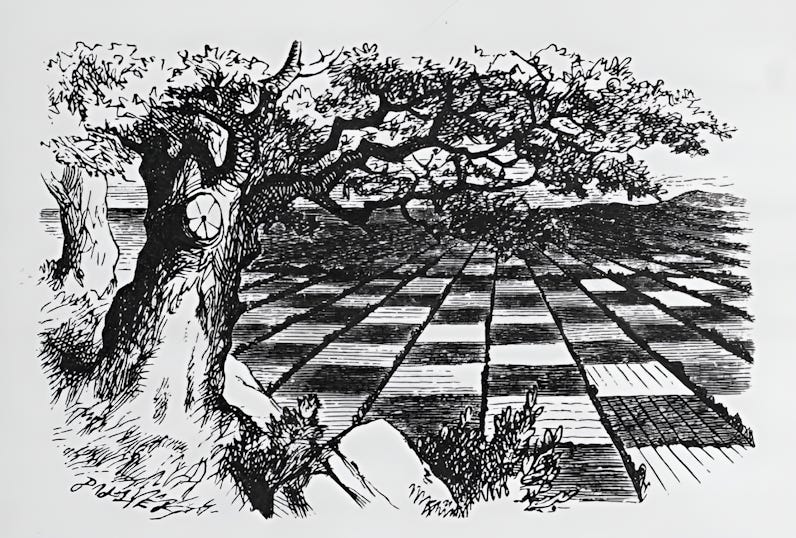
A snapshot of where we are:
Substack recently added a controversial AI-detection tool to its platform. Linkedin followed with a “Seems like AI slop“ button users can click to report what they think isn’t human-generated. What a mess! Writers and readers are being asked whether and how to use the tools because, clearly, the CEOs don’t have a clue how to stem the tide of slop without punishing the real stuff.
Book publishers are yanking titles they suspect relied on AI-assisted writing, while acknowledging they have no way of really knowing what is and what isn’t.
Author Jerry Falade lost a $2 million book deal this week after the publisher suspected he’d used AI. Falade is arguing his case.
Hank Green, the novelist and YouTube sensation, got roasted by fans for admitting he used ChatGPT “for research” on a script. Minor infraction? You decide.
Traditional media outlets are scrambling—all in different directions—to decide whether and how to use, or not use, AI. (Funny thing: How to not use AI is one of the hardest questions—you can’t do a Google search without AI weighing in.)
According to an analysis in The Conversation:
The independent news agency Reuters, which syndicates its stories to major news outlets, “has heavily incorporated AI to speed up its workflow,” especially for breaking financial news, while acknowledging that AI can introduce errors and so needs to be fact-checked by humans. The Guardian newspaper is taking a different approach, using AI only for limited support tasks (after lifting what had been a total ban).
Where does that leave all us writers, whether on staff, freelancing or self-publishing?
The ‘AI is evil’ case
Amid the confusion and differing approaches, I believe we writers need to think beyond our publishers and platforms and decide our own paths and be honest with ourselves, those we work for and with, and, most of all, readers.
New York Times columnist Bret Stephens is emphatic about what we should all do. In an Aug. 4 column, Stephens made this stark plea, not just to professional writers, but to anyone who uses writing for any purpose:
Don’t use artificial intelligence to help you write. Never let A.I. do your writing for you. … The problem with writing with A.I. is that it’s mentally enfeebling — an escalator toward a result when you really need to make a daily habit of taking the stairs.
You might disagree. It’s complicated. I get it. There are more than two sides to the issue. AI can be helpful for various tasks. AI sucks at other tasks.
How bad does AI suck? Consider this perspective, from copy editor Jeanette Smith writing on Linkedin:
Asking an editor to edit your AI-generated book is like asking a baker to fix the cake mix you accidentally made with Worcestershire instead of vanilla.
There’s also the tremendous environmental impact to consider. Every AI prompt uses electricity and water and is related to depletion and destruction of empty spaces.
Demand for AI is fueling construction of vast AI data centers and power generation facilities eating up miles and miles of vacant tracts, farmland and even pristine forests and parkland. Some 1,500 US data centers are in various stages of planning or construction, adding to more than 3,000 already in operation. Residents of a mobile home community in Kentucky are being booted to make way for a 2,000-acre data center — more than 3 square miles.
If you think you’re not affected, check out this tidbit on US nationwide electricity prices, from Consumer Reports:
Residential prices jumped 7.1 percent in 2025—more than double the inflation rate—and topped 20 percent in some states
For the love of writing
I get that AI tools appeal to people who need to make words but don’t particularly enjoy writing or are too busy to tackle that aspect of their job. I don’t have to like it, but I get it. And if that’s you, I hope you don’t embarrass yourself with the slop AI spits out for you.
But for those of us who love writing, the case against AI is simple.
For me, it’s personal.
I enjoy every aspect of the writing process: brainstorming, researching, outlining, drafting and self-editing. I don’t want AI’s help, mostly because it would rob me of the joy. And if I let a machine do the writing, or help me in any significant way, my skills will diminish.
Just as a runner must run to stay in shape, a writer must write.
Plus there’s this dark fact I pointed out the other day:
Every time you use AI to research a story or assist you in any aspect of the writing process, you are helping to improve the models, affirm the demand, and applaud the very technologists whose products aim to replace you with AI-generated writing.
The linguistic looking glass
There’s an even deeper issue at stake. AI-assisted writing represents a serious threat to human creativity. Here’s what’s already happening, as I explained recently:
Writers use a legitimate writing thing (a technique, device, word or punctuation mark).
Large language models (LLMs) like ChatGPT learn from those writers and use the thing.
AI detectors flag the thing as a sign of AI-generated writing.
Human writers stop doing the thing for fear of being flagged for using AI.
If we keep following this pattern of circular logic, we enter that linguistic looking glass, where writing is unwriting and walking away from AI brings us closer to it, or some such nonsense. We will not know what to do. Best practices will no longer make sense. In all confusion, words and styles will hew toward plain vanilla. All writing will become homogenous.
That’s what will happen to people who rely on AI to do their writing, anyway.
Those of us who truly love to write will just have to get better. AI can only spit out what it’s been trained on (that’s our stuff). It will always be less creative and less relevant than anything we can produce.
We will write stories that AI cannot.
AI will never know what we might write next.
What’s your take? Is AI-assisted writing good, evil, or somewhere in between? You’re a writer, so make your case!
Thanks for your point of view. I love to think and writing helps me figure out what I'm thinking. I obsess over studying human nature and writing helps me form stories to connect with humans. I like the deep-thinking conversations that bring clarification. Such as Luddite. They were the most technology-savvy people of their time and that was the rub. They were pushing back on the inhumanity of servitude by wealthy owners demanding more obedience to the machines. We could use Luddites in this AI mixture to get clear on what's at stake.
I dunno. This subject is dizzying. I remember being bedazzled the first time I used the internet. Now, ChatGPT is enchanting me even further. I recently injured my back and entered my MRI into Chat. It diagnosed me more precisely than my neurosurgeon (and he even admitted it). When it comes to writing, I see no reason to steer clear of Chat for research. It’s lightning fast (and I always double-check the results). It’s also pretty good at critiquing drafts (although not as good as the editor I used to have on Medium). :)