
Being a Good Writer Isn’t Enough
Or: Why so many stories underwhelm

Recently I read a really promising, interesting but ultimately disappointing essay in The New York Times. It fell flat because I never figured out exactly what the writers (three of them) were trying to say.
Funny thing is, it was evident they were good writers.
They made some wonderful sentences. The outline was solid, the flow logical.
And they had something to say.
They had authored a book together, one that sounded in tune with the zeitgeist, packed with historically rich insights and a strong narrative.
But there was a fatal flaw in the essay.
They used all the words. If they knew a word, they worked hard to squeeze it into the piece. Lots of big words, lots of extra words. Lots of “look at my vocabulary” words. They stretched what should have been a 2,200-word essay into a 2,400-word jumble with too many long, winding, hard-to-read, ill-focused passages.
It’s a common writerly mistake: trying to impress people with fancy language and masterful sentences.
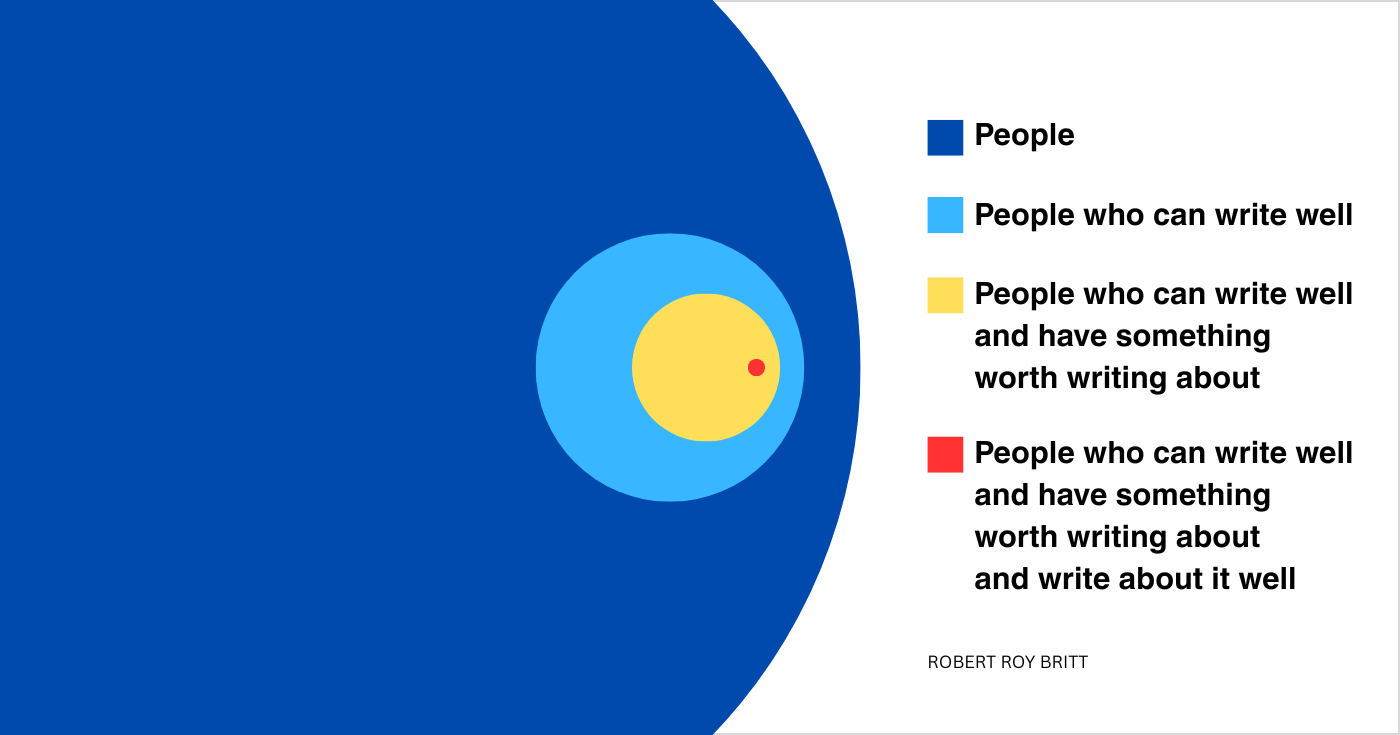
It got me thinking about how tiny is the universe of people who can write stories that are worth reading.
Let’s review.
They knew how to write well.
They had something worth writing about.
They failed to write about it well.
It’s a reminder to all of us that being a good writer is not enough. We must have something worth writing about, and we need to bring our best research, outlining, wordsmithing and self-editing skills to bear to make a given story worth reading.
All my cogitation on this led to the graphic above, admittedly a gross oversimplification but one that nonetheless illustrates the challenge we writers all face with every story.
Here are some pieces from the Writer’s Guide archives to help you avoid the mistakes those three writers made:
Well said